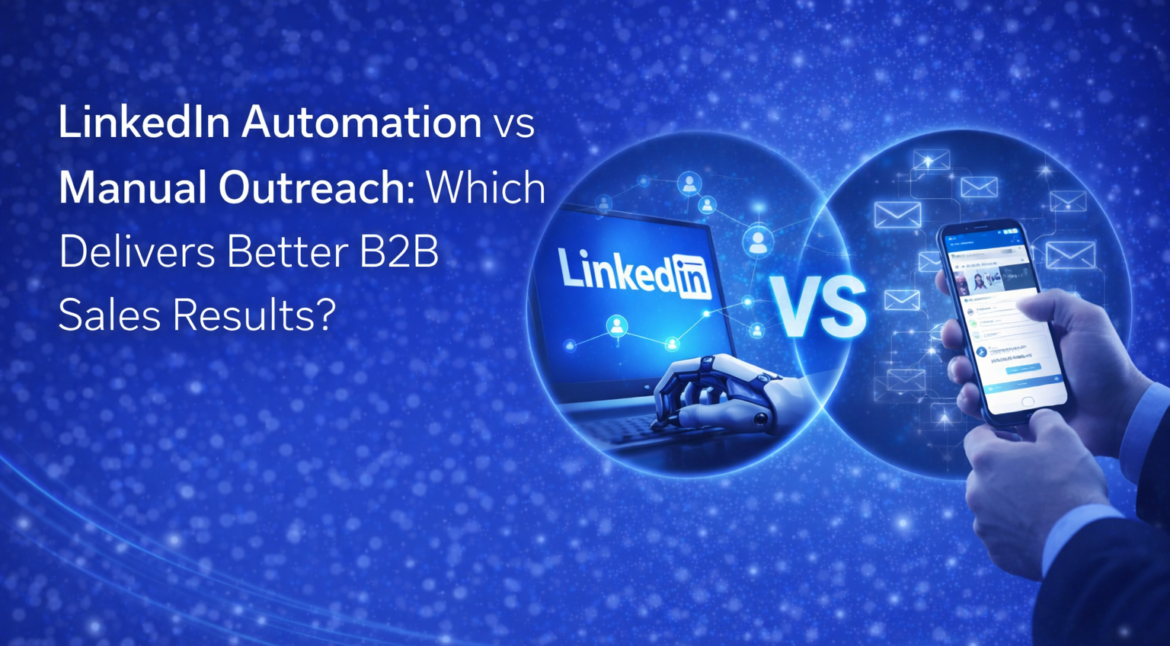
LinkedIn automation and manual outreach serve the same goal, but they work in very different ways. LinkedIn automation uses software to manage repetitive actions such as follow-ups, sequencing, lead tracking, and outreach workflow management, while manual outreach depends on a person to handle every step one by one. Platforms like BixJet help teams automate the process with more structure, speed, and follow-up discipline, while manual outreach gives full control but often struggles to scale. For most B2B teams, the best approach is not choosing one extreme. It is using automation for process efficiency and manual judgment for personalization, timing, and sales conversations.
The real difference comes down to execution. Manual outreach feels personal because a human handles every action. That can work well when lead volume is low and the target list is highly selective. A founder reaching out to ten strategic accounts may prefer to write each message from scratch. In that case, manual effort makes sense because the account value justifies the time investment.
The problem appears when outreach volume increases. Once a sales team starts managing dozens or hundreds of prospects, manual work creates friction fast. Follow-ups get delayed. Reps forget who replied. Conversations sit in inboxes without clear ownership. What begins as a personal approach often turns into an inconsistent process. That inconsistency hurts pipeline quality more than most teams realize.
Where manual outreach works best
Manual outreach still has value, especially in high-consideration sales. It allows sales professionals to adjust tone, reference recent events, and respond with precision. For enterprise deals, partnerships, or founder-led sales, that level of attention can improve response quality.
Manual outreach works best when:
- the target account list is small
- each prospect has high deal value
- messaging needs strong customization
- the sales cycle depends on relationship depth
- the team has enough time to manage follow-ups properly
These conditions matter because manual outreach demands attention at every stage. It is not only about writing one strong first message. It also requires follow-up discipline, tracking, segmentation, and timing. If the team cannot maintain that rhythm, quality drops.
Where LinkedIn automation creates an advantage
LinkedIn automation becomes more effective when consistency matters as much as personalization. A sales team does not lose leads because it lacks effort alone. It loses leads because process breaks after the first touch. This is where automation creates an operational edge.
A good automation workflow helps teams:
- schedule follow-ups on time
- move leads through structured sequences
- track replies and engagement
- reduce manual admin work
- keep pipeline activity visible across the team
This does not mean automation should sound robotic. Poorly written messages still fail, whether a person sends them or a tool sends them. The value of automation sits in process control. It helps the team make sure every prospect gets the right next step without relying on memory or scattered spreadsheets.
That is why platforms like BixJet matter in modern outreach. They help teams handle LinkedIn follow-ups, organize conversations, and track leads in one place. The result is not only more efficiency. It is stronger sales discipline.
Which one should B2B teams choose?
For most B2B companies, manual outreach alone is too fragile and automation alone is too mechanical. The stronger model combines both. Use automation to manage workflow, timing, and consistency. Use manual input to shape targeting, personalize messaging, and handle live conversations once a prospect engages.
That balance gives teams the best of both approaches. It protects message quality without sacrificing scale. It also creates a more reliable path from first touch to qualified conversation.
In practical terms, LinkedIn automation usually wins when the goal is repeatability, follow-up discipline, and pipeline growth. Manual outreach wins when the goal is deep customization for a small number of high-value prospects. The best sales teams understand this difference. They do not treat automation and manual outreach as opposites. They treat them as parts of the same sales system.